

Zoning Inequity
We support the goal of adding density to our city. However, we also believe that the proposed changes in zoning to achieve that goal should provide fair and equitable treatment of all neighborhoods in Memphis.
The three maps shown below provide a comparison between residential neighborhoods in Memphis and the proposed zoning changes recommended by the Division of Planning and Development. The first map presents a breakdown of the city's housing by race, and the other two are the proposed zoning map and the proposed Future Land Use Planning Map.
We believe these maps raise questions about whether the current plans to rezone our neighborhoods meet the test of fairness and equity regardless of location in Memphis. This is an important issue and, especially in light of Memphis's history, we should allow adequate time to make sure we get this right.
See the Race Map with Census Dots
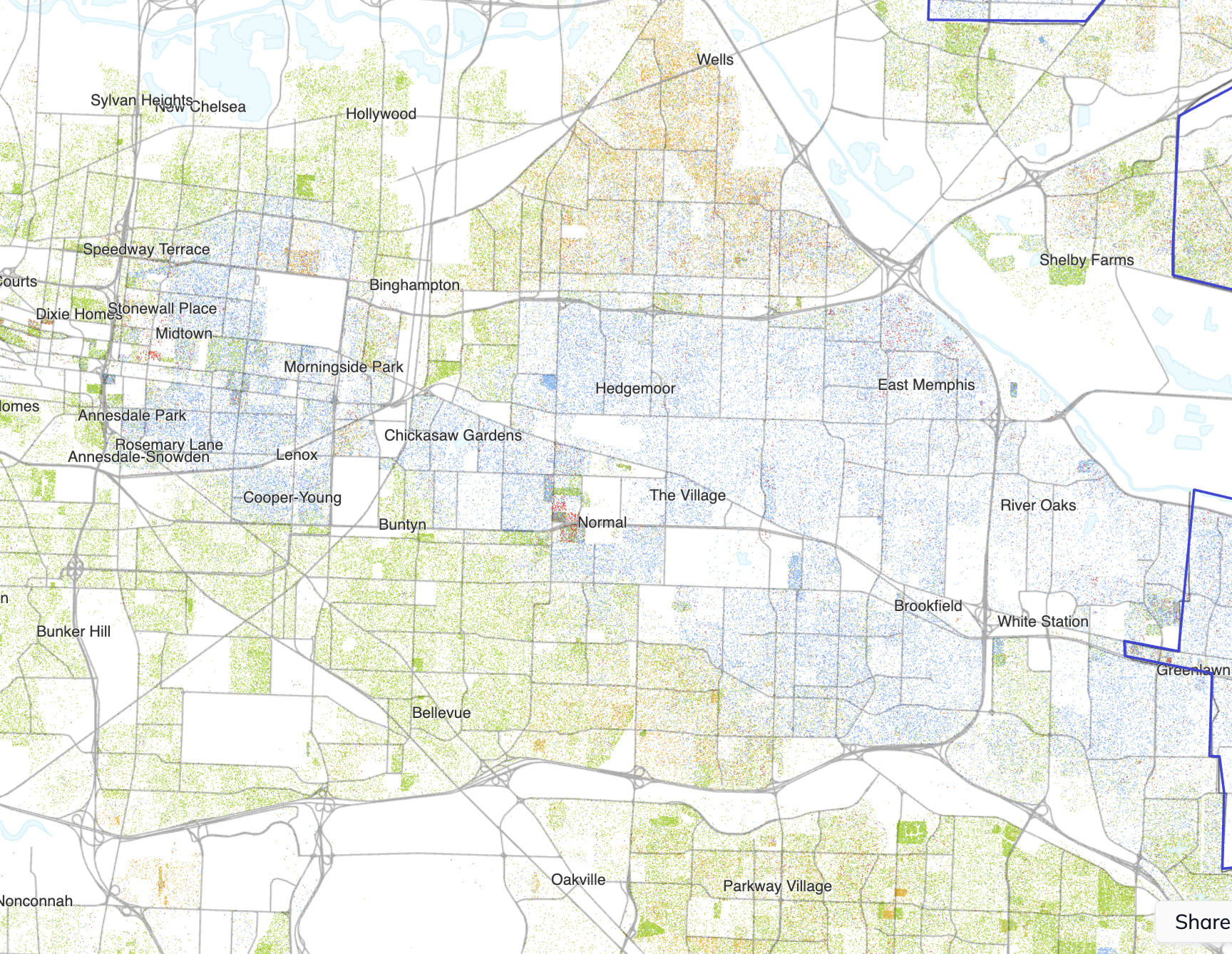
Memphis Race Demographics Map
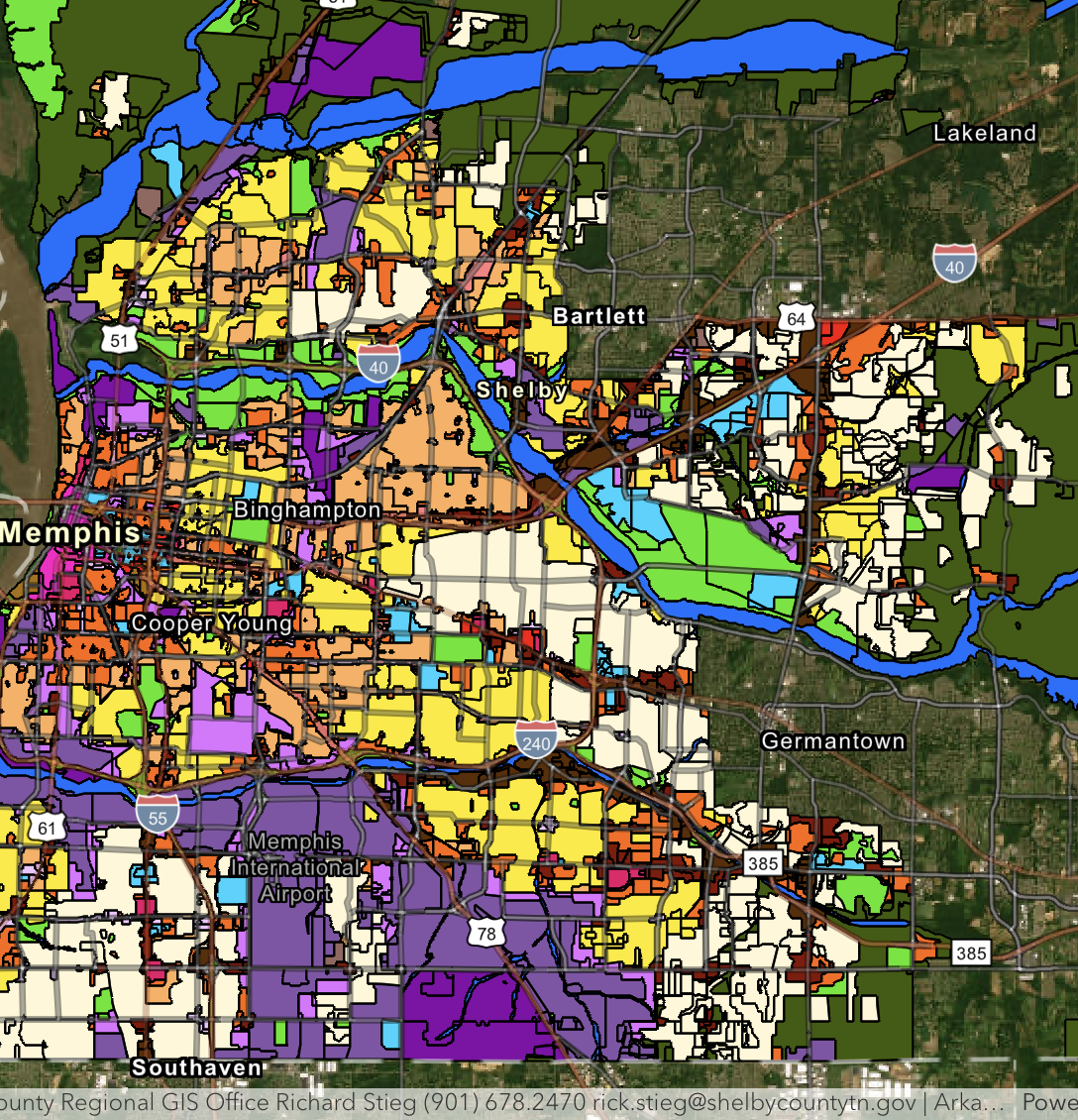
Zoning Map
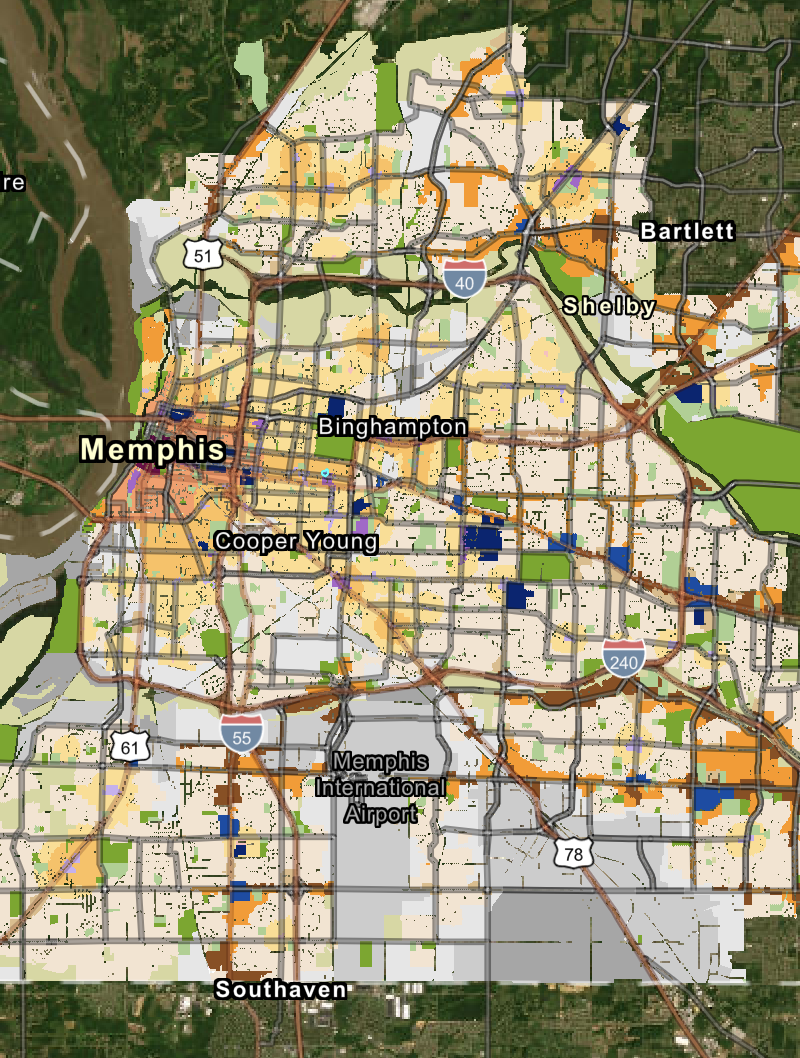
Future Land Use Map
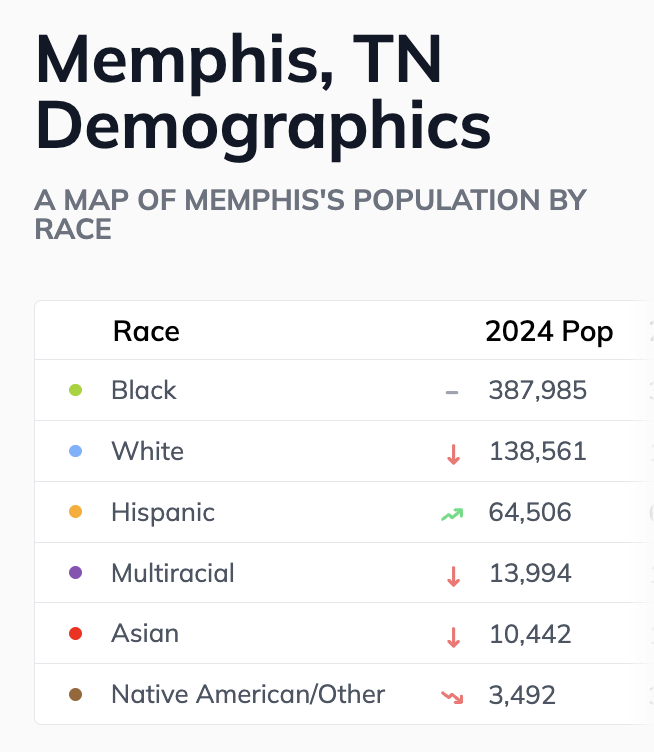
Memphis, TN Demographics
A MAP OF MEMPHIS'S POPULATION BY RACE
Memphis, Tennessee has an estimated population of 618,980, a slight decrease from the 633,104 recorded in the 2020 Census. The population is 62.7% Black, 22.4% White, 10.4% Hispanic, 2.3% Multiracial, 1.7% Asian, and 0.6% Native American/Other. This demographic dot map shows the population of Memphis, with one dot drawn for each person counted by the Census, color-coded by race.
Memphis has become less racially diverse since the 2020 Census. It is considerably more diverse than Tennessee overall. Demographers use a diversity index to measure the probability that two randomly selected individuals belong to different racial or ethnic groups. In Memphis, that probability was 55.6% in 2020 and 54.5% in the most recent ACS estimates.
Memphis is ranked the 2nd most populous place in Tennessee, out of 504 places. This ranking is based on the Census definition of a place, which includes incorporated places like cities, towns, and villages, as well as unincorporated census-designated places (CDPs). Memphis was ranked the 2nd most populous place in the 2020 Census.
Memphis's White Population
138,561 residents of Memphis, or 22.4% of the population, identify as White. The share of White residents in Memphis is significantly lower than in Tennessee overall, where 71% of the population is White. Memphis ranks 503rd statewide in terms of White residents as a share of the population, out of 504 places.
Since the 2020 Census, Memphis's White population has declined by an estimated 8.6%. White residents' share of Memphis's population has decreased from 23.9% to 22.4%.
Memphis is less White than neighboring Southaven (50.7% White), Horn Lake (35.7% White), Germantown (83.1% White), Olive Branch (52.7% White), and Bartlett(68.8% White).
Memphis's Black Population
387,985 residents of Memphis, or 62.7% of the population, identify as Black. The share of Black residents in Memphis is significantly higher than in Tennessee overall, where 15.4% of the population is Black. Memphis ranks 6th statewide in terms of Black residents as a share of the population, out of 504 places.
Since the 2020 Census, Memphis's Black population has remained roughly the same. Black residents' share of Memphis's population has increased from 61.3% to 62.7%.
Memphis is more Black than neighboring Southaven (39.3% Black), Horn Lake (50% Black), Germantown(4.4% Black), Olive Branch (35.7% Black), and Bartlett (19.7% Black).
Memphis's Asian Population
10,442 residents of Memphis, or 1.7% of the population, identify as Asian. The share of Asian residents in Memphis is comparable to the share in Tennessee overall, where 1.9% of the population is Asian. Memphis ranks 45th statewide in terms of Asian residents as a share of the population, out of 504 places.
Since the 2020 Census, Memphis's Asian population has declined by an estimated 9.2%. Asian residents' share of Memphis's population has remained roughly unchanged at 1.7%.
Memphis is more Asian than neighboring Southaven (1.2% Asian), and Horn Lake (0.8% Asian). Memphis is less Asian than neighboring Germantown (6.3% Asian), Olive Branch (2.1% Asian), and Bartlett(3.9% Asian).
Memphis's Hispanic Population
64,506 residents of Memphis, or 10.4% of the population, identify as Hispanic. The share of Hispanic residents in Memphis is slightly higher than in Tennessee overall, where 7.4% of the population is Hispanic. Memphis ranks 39th statewide in terms of Hispanic residents as a share of the population, out of 504 places.
Since the 2020 Census, Memphis's Hispanic population has grown by an estimated 3.8%. Hispanic residents' share of Memphis's population has increased from 9.8% to 10.4%.
Memphis is more Hispanic than neighboring Southaven (5.3% Hispanic), Horn Lake (9.2% Hispanic), Germantown (3% Hispanic), Olive Branch (6.3% Hispanic), and Bartlett(4.4% Hispanic).
Memphis's Native American/Other Population
3,492 residents of Memphis, or 0.6% of the population, identify as American Indian/Alaska Native/Native Hawaiian/Pacific Islander/Other. The share of Native American/Other residents in Memphis is comparable to the share in Tennessee overall, where 0.6% of the population is Native American/Other. Memphis ranks 218th statewide in terms of Native American/Other residents as a share of the population, out of 504 places.
Since the 2020 Census, Memphis's Native American/Other population has declined by an estimated 2.3%.Native American/Other residents' share of Memphis's population has remained roughly unchanged at 0.6%.
Memphis is more Native American/Other than neighboring Horn Lake (0.4% Native American/Other), Olive Branch (0.3% Native American/Other), and Bartlett(0.5% Native American/Other). Memphis is less Native American/Other than neighboring Southaven (1.1% Native American/Other), and Germantown(0.7% Native American/Other).
Memphis's Multiracial Population
13,994 residents of Memphis, or 2.3% of the population, identify as Multiracial. The share of Multiracial residents in Memphis is comparable to the share in Tennessee overall, where 3.7% of the population is Multiracial. Memphis ranks 413th statewide in terms of Multiracial residents as a share of the population, out of 504 places.
Since the 2020 Census, Memphis's Multiracial population has declined by an estimated 14.2%. Multiracial residents' share of Memphis's population has remained roughly unchanged at 2.3%.
Memphis is less Multiracial than neighboring Horn Lake (3.9% Multiracial), Germantown (2.6% Multiracial), Olive Branch (2.9% Multiracial), and Bartlett (2.7% Multiracial).
Sources: Most recent population estimates are from the 2020-2024 American Community Survey 5-Year Estimates. 2020 population counts and map data are from2020 Census State Redistricting Data. Geographic data are from Census TIGER/Line Shapefiles.
